In the world of industrial infrastructure, flooring is far more than a surface—it is a structural system that directly impacts safety, productivity, longevity, and operational efficiency. Ultra heavy duty industrial flooring represents the pinnacle of engineered flooring solutions, designed to withstand extreme loads, harsh chemical exposure, high thermal stress, and relentless mechanical abuse. This article explores the technical depth behind these systems, from material science and structural considerations to installation methodologies and lifecycle performance.
1. Defining Ultra Heavy Duty Industrial Flooring
Ultra heavy duty industrial flooring refers to high-performance flooring systems engineered for environments subjected to:
- Continuous heavy vehicular traffic (e.g., forklifts, automated guided vehicles)
- Extreme point loads (e.g., heavy machinery, storage racks)
- Abrasive conditions (e.g., mining, metal fabrication)
- Chemical exposure (e.g., acids, solvents, oils)
- Thermal cycling or shock (e.g., foundries, cold storage, food processing)
These systems typically exceed standard industrial flooring in compressive strength, abrasion resistance, and chemical durability.
2. Material Composition and Performance Characteristics
2.1 High-Strength Concrete Substrates
The backbone of most ultra heavy duty flooring systems is a reinforced concrete slab with:
- Compressive strength: 40–70 MPa or higher
- Low water-cement ratio (<0.40)
- Fiber reinforcement (steel or synthetic)
- Shrinkage-reducing admixtures
Proper curing is critical to minimize cracking and ensure long-term durability.
2.2 Resin-Based Flooring Systems
Epoxy Systems
- High compressive strength (up to 90 MPa)
- Excellent adhesion to concrete
- Moderate thermal resistance
Used in manufacturing plants, warehouses, and pharmaceutical environments.
Polyurethane (PU) Systems
- Superior thermal shock resistance
- Flexible under dynamic loads
Often installed as polyurethane cementitious systems for extreme durability.
Methyl Methacrylate (MMA)
- Rapid curing (even at low temperatures)
- High chemical resistance
- Ideal for fast-track installations
2.3 Aggregate Reinforcement
Heavy-duty flooring often incorporates:
- Quartz aggregates for abrasion resistance
- Aluminum oxide for extreme wear environments
- Metallic aggregates for impact zones
These are broadcast into resin systems or integrated into concrete toppings.
3. Structural and Load-Bearing Considerations
3.1 Static vs Dynamic Loads
- Static loads: storage racks, heavy equipment
- Dynamic loads: moving vehicles, vibration
Floor systems must be designed to handle both without deformation or fatigue failure.
3.2 Load Distribution and Slab Design
Key factors include:
- Subgrade preparation and compaction
- Load transfer mechanisms (dowels, joints)
- Slab thickness (often 150–300 mm or more)
Finite Element Analysis (FEA) is frequently used to model stress distribution.
3.3 Joint Design and Control
Joints are critical weak points if poorly designed:
- Expansion joints accommodate thermal movement
- Control joints manage shrinkage cracking
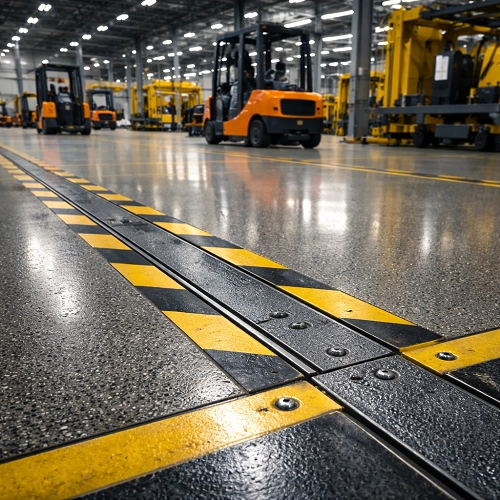
- Armored joints protect edges from impact
Jointless or large-panel slab designs are increasingly used to minimize maintenance.
4. Surface Engineering and Functional Performance
4.1 Abrasion Resistance
Measured using tests like ASTM C944 or Taber Abrasion:
- Essential in logistics hubs and manufacturing plants
- Enhanced through hardeners and aggregate systems
4.2 Slip Resistance
Balancing safety with cleanability:
- Textured finishes increase traction
- Anti-slip additives (silica, polymer beads)
- Must comply with OSHA or equivalent standards
4.3 Chemical Resistance
Depends on resin type and exposure:
- Epoxy: resistant to oils, fuels, mild acids
- PU: resistant to lactic acid, fatty acids
- Specialized coatings for strong acids/alkalis
Chemical compatibility charts are essential during design.
4.4 Thermal Resistance
Critical in environments with:
- Steam cleaning
- Hot spills
- Freeze-thaw cycles
PU cement systems can withstand thermal shock up to 120°C or more.
5. Installation Methodologies
5.1 Surface Preparation
The most critical step:
- Shot blasting or diamond grinding
- Removal of laitance and contaminants
- Achieving proper surface profile (CSP 3–5 typical)
5.2 Moisture Mitigation
Excess moisture leads to delamination:
- Moisture vapor emission rate (MVER) testing
- Use of moisture barriers or epoxy primers
5.3 Layered System Installation
Typical system includes:
- Primer layer
- Base coat
- Aggregate broadcast
- Topcoat/sealer
Each layer must cure properly before the next is applied.
5.4 Environmental Controls
- Temperature and humidity must be controlled
- Ventilation required for certain resins (e.g., MMA)
6. Maintenance and Lifecycle Performance
6.1 Routine Maintenance
- Mechanical cleaning (auto-scrubbers)
- Avoid harsh chemicals unless compatible
- Regular inspection of joints and coatings
6.2 Repair Strategies
- Crack injection (epoxy or polyurethane)
- Partial resurfacing
- Joint repair and resealing
6.3 Lifecycle Cost Analysis
While initial costs are high, benefits include:
- Reduced downtime
- Lower maintenance costs
- Extended service life (15–30+ years)
7. Industry Applications
Ultra heavy duty flooring is essential in:
- Aerospace manufacturing
- Steel and metal processing plants
- Distribution and logistics centers
- Food and beverage production
- Pharmaceutical and chemical facilities
- Automotive assembly lines
Each industry imposes unique stressors requiring tailored flooring solutions.
8. Emerging Technologies and Trends
8.1 Self-Healing Materials
Incorporating microcapsules that release repair agents when cracks form.
8.2 Smart Flooring Systems
Embedded sensors for:
- Load monitoring
- Temperature tracking
- Predictive maintenance
8.3 Sustainable Materials
- Low-VOC resins
- Recycled aggregates
- Carbon-reduced concrete
Ultra heavy duty industrial flooring is a highly specialized engineering domain that integrates material science, structural design, and environmental considerations. The performance of these systems directly influences operational efficiency, safety, and long-term cost-effectiveness. As industries continue to push the limits of productivity and automation, the demand for more resilient, intelligent, and sustainable flooring solutions will only grow—making this field a critical component of modern industrial design.